


Emergent aquatic plants grow above the water surface with leaves in air, while submerged plants live fully underwater within the water column. Both can adapt to aquarium life: emergent-grown plants often shed their original air-formed leaves and regrow underwater leaves, a normal transition rather than a sign of plant failure.
Last updated: 8 September 2026
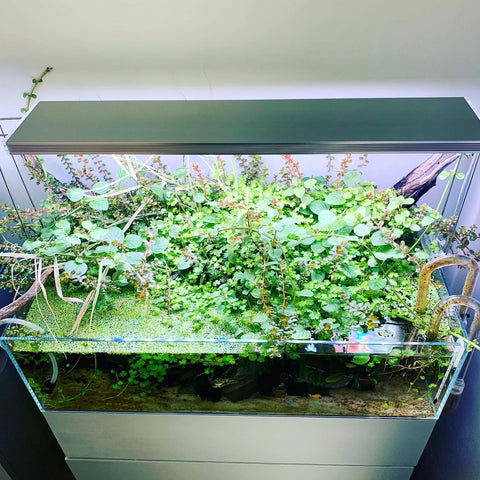
The emergent and submerged growth of aquatic plants
Aquatic plants are commonly available in most aquarium stores and can generally be divided into two types: Emergent and submerged. These two terms are defined by how we grow these plants within the aquarium.
In nature, the plants that we view as aquatic plants most likely do not live 100% beneath the water surface. While some plants do, it is much more common to find our favourite aquatic plants growing on land along the shoreline and shallow areas of lakes, rivers, streams and shallow ponds while also being exposed to natural sunlight, collecting nutrients via their root systems and substrate. Many of these locations will receive seasonal flooding, forcing the plants into a fully aquatic setting for short periods. However, the majority of the year will see only their roots set underwater.
This is very common in low flood plains, where plants will survive several months below the water's surface. While there are undoubtedly benefits to being underwater, this setting exposes plants to the many pollutants in natural waterways. We must acknowledge that things are different in nature compared to the closed environment of an aquarium. It is not practical for us to change the water level all the time, so we must choose our plant species according to the layout and style of the aquarium we are planning.
The main difference between these two categories can easily be explained. Emergent plants grow above the surface of the water, while submerged plants grow within the water column below the water surface. There is usually a difference in sale price too. It is a costly process to create conditions suitable for growing submerged plants. Growing aquarium plants emerged is more cost-effective and quicker!
First of all, let us clear up a common misconception.
"Plants grown above water do not adapt to the aquarium as good as plants that are grown underwater."
Usually, when an aquatic plant from an emergent cultivation is placed underwater. Unlike submerged vegetation, emergent aquatic plants original leaves (produced in terrestrial conditions) will melt. Without understanding this stage of the plant's adaptation to the new environment, many aquarists quickly assume the erosion of leaves indicates their new plants have failed.
However, it is worth waiting for this situation to play out. Patience is an aquascapers secret weapon.
This process takes time, and we should always expect some leaves to melt away. New leaves will appear as long as we provide food and the aquatic plants are well rooted in the soil. The newly released underwater leaves often contrast with the original leaves with slightly different shapes and colours. Strangely, when plants more used to growing on dry land above the water surface become submerged, form new leaves that are more rounded than before. The fresh leaves are entirely normal and all part of the process of adapting.
Depending on the type of aquatic plants - adaptation takes various forms.
-
Plants with long stems (Stem plants such as Rotala, Ludwigia, Limnophila, Myriophyllum) adapt to underwater conditions.
-
Plants of the genus Hygrophila, Alternanthera adapt longer than the above. It will lose leaves close to the substrate when in a low light penetration habitat.
-
In most cases, plants of the genus Cryptocoryne (which applies to both emergent and submerged plants) will lose their leaves (Also known as 'Cryptocoryne Disease'). It would help if you cut the diseased leaves, leaving only the rhizome behind - in the next few days, new plant growth will begin to form, fully adapted to the conditions in the aquarium.
-
Plants of the genus Echinodorus can quickly adapt to the aquarium habitat depending on the species (colourful artificial hybrid strains adapt more difficult). Most often, the adaption process begins with a mesh on the surface of the leaves and, ultimately, the death of the entire leaf blade. In the next few days, new plant growth appears from the rosette, adapted to the conditions in the aquarium.
-
Plants of the genus Microsorum, Anubias - adapt to the aquarium without any problems. This is because their native habitat is the banks of rivers, streams and wetlands.
The information above is relevant to aquariums suitable for each plant species. Adequate lighting power (minimum 0.4W / l for smaller aquariums), soft-medium hard water and pH 6.5-8, fertile soil and carbon dioxide. When adding new emergent plants to the aquarium, the provision of CO2 will also significantly increase your plant's recovery time. We must consider that all plants initially grown in emergent conditions have had access to unlimited atmospheric Carbon Dioxide. It only makes sense to provide them with additional CO2 to compensate for this new habitat.
Emersed plants available in local fish stores are more durable than plants grown in underwater.
-
They grow under natural light, which promotes a fast metabolism, and appropriate levels of enzymes and plant hormones, not limited by the availability of nutrients in the water. This environment builds vigorous, resilient plants capable of being successfully introduced to the aquarium environment.
-
Plants growing above the water surface have stronger stems, which are very beneficial when transporting plants from the supplier to the shop and from the shop to your aquarium.
-
They have a considerable amount of stored nutrients, which comes in handy while adapting to their new underwater habitat.
-
They are free from waterborne diseases and parasites. No more pest snails hitchhiking their way into your aquarium.
-
Free of hard-to-remove algae spores and cyanobacteria. Ultimately algae-free plants, leaving the algae battle ball in your court. You should see no unwanted algae in the aquarium if you provide the correct care.
The most common mistakes and problems with plant adaptation which are contributing to the myth that plants cannot adapt successfully to the aquarium habitat:
-
Impatience: Removing plants when their old leaves die off. Always allow time for the new aquatic leaves to form.
-
Lack of nutrients: Placing new aquarium plants in sterile substrates like plain gravel will not be sufficient enough to sustain the new growth during the transitional period.
-
Poor Filtration: Inadequate filtration can cause a build-up of unwanted materials and invites algae to form.
-
Inadequate lighting: Plants need light. Strong, consistent lighting periods are essential to photosynthesis, which is vital to all plants' growth. Research your plant's requirements and use a timer to provide the relevant length and strength of light (photoperiod)
-
Lack of CO2: Plants require carbon dioxide. While the fish generate a small amount in your aquarium, this will not be sufficient for most aquarium plants. The provision of co2 will significantly benefit the plants during their transitional period.
-
Irregular water changes: A lack of regular water changes harms aquariums, but when adding new plants, it is essential to do weekly water changes to maintain the optimum conditions.
-
Incorrect water parameters: Just like fish, they require specific conditions. Ph, temperature and hardness are all elements we should aim for to give transitional plants all the tools they need to thrive.
Summary
Maintaining an aquarium with both submerged and emergent growth is possible. The modern aquascaper can benefit from access to high-quality substrates, nutrients, lights, and CO2 injection. So, with a bit of forward-thinking, you can enjoy a beautiful display with all different types of plants.
Some species even produce flowers once established, which can be highly satisfying. Why not try creating a shallow pond-style aquascape that combines both submerged and emerged growth. This design pulls together both categories to create a very natural display.
Emergent versus submerged growth in the aquarium
| Growth type | Where it grows | Adaptation speed | CO2 needed |
|---|---|---|---|
| Emergent plants | Above the water surface | Faster, more durable stock | Yes, to speed recovery |
| Submerged plants | Below the water surface, within the water column | Slower, costlier to produce | Yes |
Frequently asked questions
What does submerged plants meaning refer to in aquariums?
Submerged plants are species that grow completely underwater, taking in nutrients through both leaves and roots while living within the water column. Most aquarium stem and rosette plants end up growing this way, though many are originally propagated as emergent plants in nurseries before sale.
Do aquatic plants need to be fully submerged?
No. In nature many aquatic plants grow along shorelines with only their roots underwater for most of the year, becoming fully submerged only during seasonal flooding. In an aquarium they can adapt from emergent to submerged growth, though some species do well with only partial submersion.
What are emergent plants for an aquarium?
Emergent aquatic plants are grown above the waterline in nurseries, with leaves and stems exposed to air and natural light. When moved underwater, their original air-formed leaves often melt back while new leaves adapted to submerged conditions form, which is a normal step, not a failure.
Why do new aquarium plants lose their leaves after planting?
Leaf loss usually happens when emergent-grown plants adjust to underwater life. The leaves formed in air die back as the plant produces new leaves suited to the water column. Given enough time, light, nutrients and CO2, most plants recover and grow normally within the aquarium.
Sources
- Glass Grown- Emergent vs. Submerged Aquatic Plants: Your Guide to Aquascaping
- Marine Plus Aquariums - Emersed vs Submersed Grown Aquarium Plants
Steady CO2 injection during the leaf-melt transition helps newly submerged plants rebuild their underwater leaf structure faster, since emergent-grown plants are used to unlimited atmospheric carbon dioxide and need a substitute source once submerged. A stable CO2 diffuser keeps dissolved CO2 even across the tank so both new and established plants get a consistent supply through the adaptation period. See the product.
Share:
Say hello to Lobelia Cardinalis “Mini”!
Combating Cyanobacteria in your aquarium