
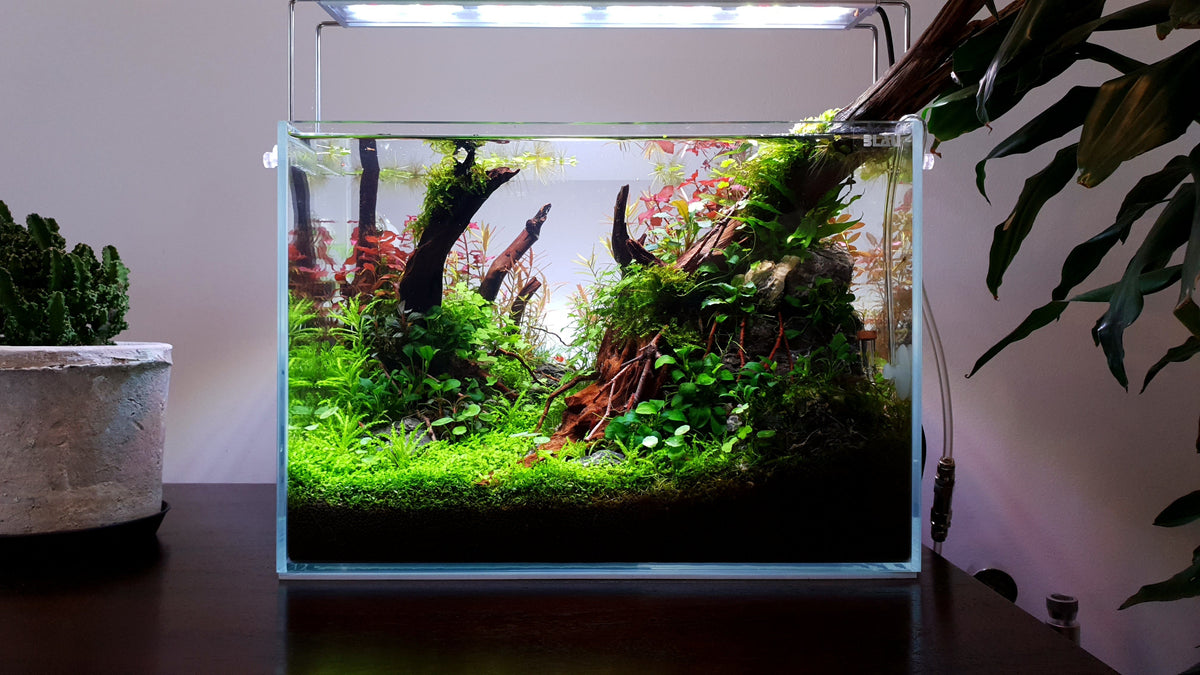
Pearl weed is a fast, fine-leaved freshwater stem plant, sold as Micranthemum micranthemoides or Hemianthus micranthemoides, that grows upright in the midground and spreads into a low carpet when it is planted in small portions and trimmed often. It roots quickly, tolerates a wide range of tap water, and rewards injected CO2 with shorter, denser growth, which is why most flat pearl weed carpets are grown in CO2 tanks.
What is pearl weed?
Pearl weed is a small-leaved stem plant from the Micranthemum group. Thin, branching stems carry rounded bright-green leaves in tight whorls, and the whole plant stays soft and feathery rather than structural. In the trade it turns up as pearl weed, baby tears or dwarf baby tears, which is where most of the confusion starts. Under good light it pearls, releasing visible strings of oxygen bubbles from the leaves while photosynthesis is running hard, and that habit gave the plant its common name.
It is sold as a carpeting plant, but it is not a true creeper like dwarf hairgrass. Left alone it grows towards the light and turns into a bushy midground thicket. The carpet is something you make, by planting it thinly and cutting it back before it gets tall. That is good news for a first planted tank: the plant does the growing, and your job is only to keep shortening it.
Pearl weed, Monte Carlo and dwarf baby tears: the naming
Several plants share the pearl weed shelf. Micranthemum micranthemoides is the plant this guide is about. Micranthemum tweediei, sold as Monte Carlo, has larger round leaves and hugs the substrate. Hemianthus callitrichoides, sold as Cuba or dwarf baby tears, is the smallest and the fussiest of the three. Plant databases list Micranthemum micranthemoides as possibly extinct in the wild, so hobby stock is nursery-grown and labels vary between suppliers. Check the botanical name on the pot rather than the common one before you plan a scape around it.

Does pearl weed need CO2?
Pearl weed will live without injected CO2. In a lit, fed tank without it, growth is slower, the stems stretch, the gaps between leaf whorls open up, and the plant leans towards the light instead of filling sideways. You get a thin bush rather than a lawn. With CO2 the same plant grows short internodes, branches harder after every trim, and closes into the dense mat people buy it for.
The reason is simple. Carbon is the nutrient plants use most, and the one that soft, fast species run out of first. Injected CO2 raises what is available in the water during the lighting hours, so light and fertiliser stop being wasted. If a flat carpet is the goal, budget for the gas before you budget for more light, because more light without more carbon mostly grows algae.

A steady supply matters more than a generous one. A dual-stage regulator with a solenoid holds the same working pressure as the cylinder empties and lets a timer switch the gas with the lights, which is what keeps a carpet even from week to week. Start the gas before the lights come on so the water is already charged when the plants wake, and stop it before the lights go off. Aim for green reagent in the drop checker through the photoperiod, and write down the bubble rate that got you there so you can set it again after a cylinder change.
How do you plant pearl weed as a carpet?
Plant it thin, and plant it deep enough to stay put. Split the pot into small portions of a few stems each, strip the lowest leaves, and push each portion into the substrate with tweezers so the bare stem is buried and the remaining leaves sit clear of the surface. Space the portions out instead of crowding them. Gaps give you room to trim into, and pearl weed fills a gap far faster than it recovers from being planted in one dense slab.
Then let it run. The first weeks are vertical, because the plant is rooting and reaching for light, and the carpet only really starts when you cut it. Each cut makes the stem branch below the wound, so the planting widens with every trim. Our guide to growing carpet plants covers the substrate side of the same job.
- Portions of a few stems, spaced apart, never one thick mat.
- Bury the bare stem and keep the leaves off the substrate.
- Trim the first time before the plant reaches the height you want, not after.
- Replant the healthy tops into bare patches instead of binning them.
- Put the gas and the lights on the same timer from the first day.
| What you decide | Grown as a low carpet | Grown as a background bush |
|---|---|---|
| Planting | Small portions, spaced apart, stems buried | Larger bunches at the back, closer together |
| Light | Bright and consistent | Moderate is enough |
| CO2 | Injected, on a timer with the lights | Optional; growth is slower and looser |
| Trimming | Across the top, little and often | Cut back when it nears the surface |
| Where it goes | Foreground to midground, open ground | Midground to background, behind hardscape |
| What you get | A dense, even mat | A soft, feathery thicket |
What light and nutrients does pearl weed need?
Moderate light keeps pearl weed alive; a carpet needs more, because the plant has to find sideways growth easier than stretching. Run the lights for a set period every day and change one thing at a time. A photoperiod of 8 hours is the usual starting point, and stability beats intensity. If the lower layer of the carpet starts browning, it is being shaded by the layer above it rather than starved.
Pearl weed feeds mostly from the water, so a complete liquid fertiliser carrying nitrogen, phosphate, potassium and trace elements does more for it than a rich substrate, though a nutrient substrate helps the roots take hold. Dose to the growth you actually have: a bright CO2 tank full of stems eats far more than a quiet low-tech one. Small, pale new leaves usually mean the tank is short of nutrients, not that the light is wrong.
How often should you trim pearl weed?
Often, and lightly. A carpet held at the height you want stays dense. A carpet allowed to double and then cut hard goes bald, because the shaded lower stems have already given up. Trim across the top with curved scissors, then net the clippings out before they settle and root where you do not want them. Once the tank is running, expect this on a regular cycle rather than as an occasional job.
When the mat gets thick enough that water no longer moves through it, thin it rather than trim it. Lift sections out, cut the healthy tops, and replant those into the cleared ground. That resets the carpet without a full replanting day. The old dark stems at the bottom are the part to remove, because that is where rot and algae start.
Common pearl weed problems and what they mean
Almost every pearl weed complaint is a light-and-carbon story rather than a plant problem. The plant is fast and honest: it shows you what the tank is short of within a week or two.
- Melting after planting: nursery stock adapting to your water. Leave it in and judge the new growth at the tips, not the leaves you bought.
- Leggy stems with long gaps between the whorls: not enough light, or light and carbon out of step. Fix the gas before you add lamps.
- Bald ground under a thick mat: shading. Thin the carpet and replant the tops.
- Algae on the older leaves: growth has stalled while the lights carried on. Check the gas runs through the whole photoperiod.
- Clippings rooting all over the scape: net them out during the trim, not the day after.
Can you grow pearl weed without CO2?
Yes, with different expectations. Without injected gas, treat pearl weed as a soft background bush: plant it at the back, let it grow up, trim it when it nears the surface, and accept an open feathery look instead of a lawn. Keep the light modest so the plant's slower growth can keep up with it, and dose liquid fertiliser lightly and regularly. A liquid carbon supplement is not a substitute for injected gas, whatever the bottle says, and it will not give you a flat carpet.
The CO2 kit a pearl weed carpet needs
The job needs a cylinder, a regulator that controls pressure precisely, a way of dissolving the gas, and a way of seeing the result. The regulator is the part worth spending on, because an even carpet is the product of an even supply rather than a strong one.
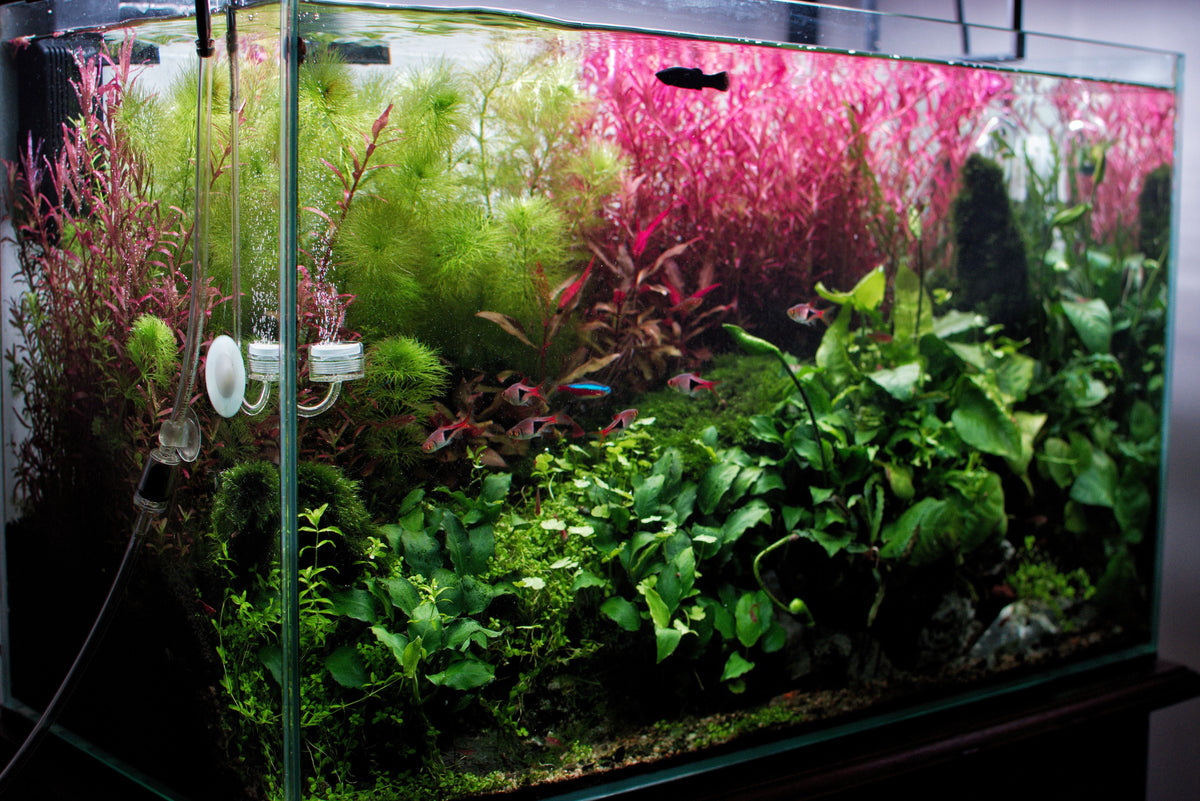
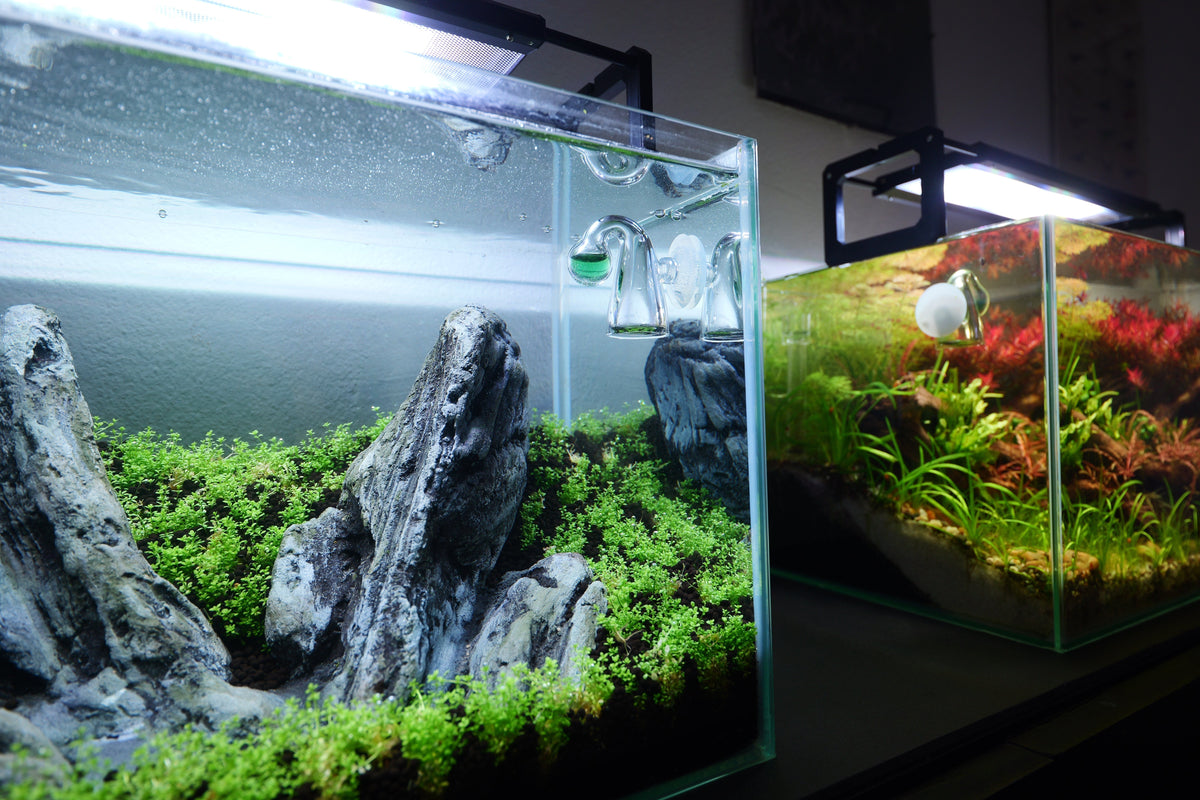
How you dissolve the gas depends on your filter. An in-tank diffuser pushes it through a ceramic membrane into a fine mist and needs nothing but tubing and pressure behind it. An inline atomiser sits on the return hose of an external filter and keeps the hardware out of the display tank. Both want the working pressure the diffuser is rated for, around 40 psi, before they mist properly, so give the system a few minutes to build up after a change.
Whichever you choose, add a drop checker and hang it where the flow is weakest. It reports dissolved gas as a colour, with a lag, so it tells you whether the tank was right a while ago rather than right now, which is exactly the question when a carpet slows down. Watch the livestock before the plants: if anything is gasping at the surface, turn the gas down and increase surface movement.
Frequently asked questions
Does pearl weed need CO2 to carpet?
It grows without injected CO2, but a dense flat carpet is realistically a CO2 tank job. Without the gas the stems stretch towards the light and the plant stays an open bush. With it, growth shortens and branches after every trim.
How do you make pearl weed grow sideways instead of up?
Plant small portions with gaps between them, and trim the tops before the plant reaches the height you want. Every cut makes the stems branch lower down, so the planting widens. Trimming little and often is what keeps the mat dense.
Is pearl weed the same as dwarf baby tears?
No. Dwarf baby tears is Hemianthus callitrichoides, a smaller and far more demanding plant. Pearl weed, Micranthemum micranthemoides, has slightly larger leaves on taller stems, grows faster and forgives more, although shops use both names loosely.
Why is my pearl weed melting after planting?
New stock often sheds the leaves it grew at the nursery while it adapts to your water, light and flow. Leave it planted, keep the gas and the fertiliser steady, and judge the plant by the new growth at the tips.
How fast does pearl weed grow?
Fast in a lit tank with injected CO2, fast enough to need trimming on a regular cycle rather than occasionally. Growth slows markedly without CO2 or under weak light, and that is usually when algae appears on the older leaves.
If you are putting that together for the first time, our complete CO2 kits pair a matched regulator and diffuser, so a pearl weed carpet starts with gear that already fits together.
Share:
CO2 Diffuser: Inline vs In-Tank, and How to Choose